The question we hear most from people moving to the Golden Isles sounds simple:
“Which area is right for me?”
The honest answer is: it depends.
Are you retired, working or going to college? Do you want to walk to dinner, keep a boat behind the house or have enough land that you cannot see what your neighbor is grilling? What is your budget? And—this is important—are you emotionally prepared to be operating on island time at 11 a.m. on a Tuesday?
Brunswick, St. Simons Island and Jekyll Island are close enough to share restaurants, schools, doctors and friendships. But living in them feels very different. Choosing well has less to do with finding the area that looks best during a long weekend and more to do with understanding how you want an ordinary Wednesday to work.
So, here is the practical version—with a few opinions sprinkled in, because you can find the sanitized tourism copy somewhere else.
The quickest possible answer
If you want... | Start your search in... |
|---|---|
Walkability, restaurants, social energy, beach access and golf | St. Simons Island |
More house or land for the money, easier errands, boating access and fewer restrictions | Brunswick and mainland Glynn County |
Nature, quiet, bike rides and a more removed island rhythm | Jekyll Island |
A more rural or small-town alternative north of Glynn County | Darien and McIntosh County |
Better positioning for a regular Jacksonville commute | Southern Glynn County or Camden County |
That table is a starting point, not a verdict. There are quiet corners of St. Simons, social pockets of Brunswick and busy days on Jekyll. The right answer is usually a combination of lifestyle, budget and tolerance for inconvenience.

First, a local translation: “Brunswick” can mean more than the City of Brunswick
This trips up almost everyone searching from out of town.
When locals say “Brunswick,” they may mean the actual city limits, historic Old Town, or the much broader mainland side of Glynn County with a Brunswick mailing address. Oak Grove Island, the Harry Driggers Boulevard area, Blythe Island and communities near Exit 29 can all appear in a Brunswick home search, but they do not offer the same setting or daily routine.
Do not judge all of mainland Brunswick by one ZIP code, one online statistic or one drive from the interstate.
Brunswick can look intimidating when someone researches it only through crime maps and national data sites. As real estate professionals, we do not label neighborhoods as “safe” or “unsafe,” and we encourage buyers to review the sources that matter to them directly. But data on a screen does not tell you what daily life feels like.
It does not show you the waitress who remembers your order and asks about your children. It does not show people holding the door, the growing downtown community, or the river and marsh views that appear between ordinary errands. It also does not show how easy it can be to cross town without surrendering half your day to traffic.
My highly opinionated take: Brunswick is much better in real life than it looks in an internet rabbit hole.
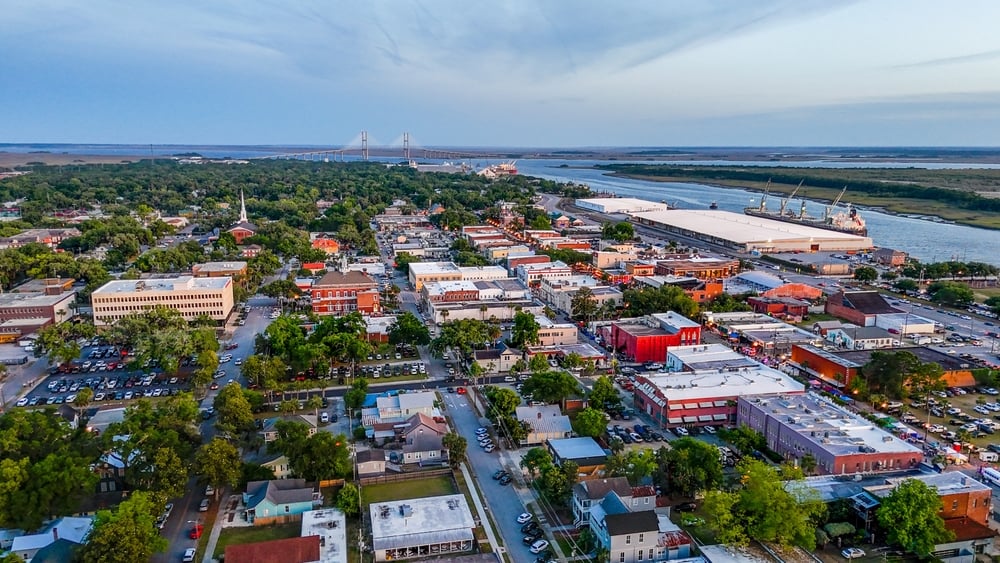
Living in Brunswick: more options, more space and an easier daily rhythm
Brunswick makes sense for someone who appreciates the coastal lifestyle but perhaps wants it in smaller doses. You still want the good food, marsh views and access to the islands—but you also need to get places on time, would prefer more house for the money and do not require beach cruisers to pass your office window at lunch.
The mainland generally offers broader housing variety: historic homes, established subdivisions, golf and waterfront communities, new construction, larger lots and properties with fewer neighborhood restrictions. It is also usually easier to reach I-95, medical offices, larger stores and everyday services.
Mainland areas worth understanding
Historic Old Town and Downtown Brunswick offer the mainland’s strongest walkable setting, with local restaurants, shops, events, historic architecture and the city’s signature squares. Buyers should evaluate homes individually; age, renovation quality, flood exposure and block-by-block surroundings can vary.
The Harry Driggers Boulevard area is so commonly referenced that newcomers may as well learn the phrase now. Even if you do not move there, you will eventually meet someone who “lives off Harry Driggers.” This part of mainland Glynn includes numerous established residential communities with relatively convenient access to schools, shopping, the airport and St. Simons. Carriage Gate is one of the communities buyers frequently ask us about in this area.
Exit 29 and southern Glynn County appeal to buyers who want to live outside the center of town while still reaching major employers and services without an extreme commute. Depending on the property, buyers may find larger lots, no HOA or a different style of home than the newer, tightly spaced subdivisions common in many markets. Communities in this broader area include Royal Oaks, Foxcreek Estates, Laurel Island, Serenoa Cove, Lakeside at Longwood and Barrington Oaks. Each has its own mix of lot sizes, amenities, water or marsh exposure, restrictions and price points.
Oak Grove Island deserves its own mention. It is an island community on the mainland side, with Brunswick’s only golf-course neighborhood setting, community amenities and a mix of golf, lagoon, marsh and deepwater properties. It has also recorded multiple million-dollar sales. I may be biased because I live there, but it is one of the most distinctive communities in Brunswick.
Riverside is known for waterfront property and beautiful river views. It also illustrates why “waterfront” should never be the end of your research. Flood exposure, insurance, elevation, dock condition and access depth must be investigated property by property. Riverside has no blanket aesthetic consistency created by a traditional HOA, which some buyers see as freedom and others see as a drawback.
My honest summary: Brunswick is the practical choice—but practical does not mean boring. For many people, it is the sweet spot between coastal living and having a life that still functions efficiently.
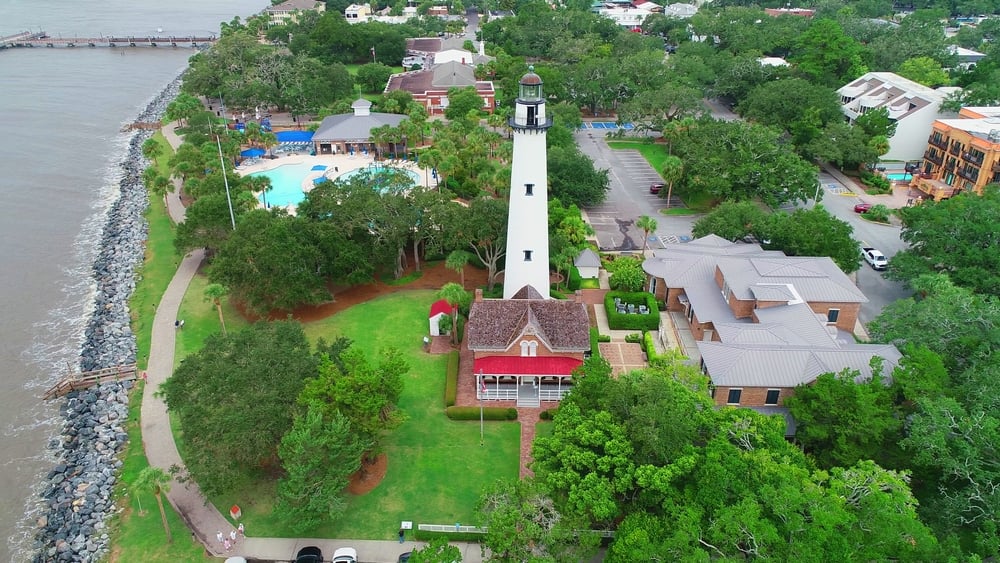
Living on St. Simons Island: social, convenient and unapologetically on island time
Someone who thrives on St. Simons has probably accepted the humidity, loves good food, enjoys being around people and is not always in a hurry. They do not find it strange to pass someone on a bicycle or in a bathing suit during the workday. Depending on where they live, a golf cart may feel like a perfectly reasonable form of transportation.
St. Simons offers the strongest combination of beach access, restaurants, golf, events and social life. The south end—especially around the Pier Village and nearby beach areas—provides the most recognizable walkable island lifestyle. Other parts of the island are more residential and car-dependent, so “living on St. Simons” does not automatically mean walking everywhere.
It can be a particularly good fit if you:
- Want restaurants, coffee, shopping and activities close by
- Care more about lifestyle than getting the maximum square footage for your budget
- Want several golf options nearby
- Enjoy a community that stays socially active without feeling like a large city
- Can be flexible when seasonal traffic, festivals or causeway backups slow things down
The tradeoff is that convenience comes with demand. Island homes can cost more than comparable mainland properties, lots may be smaller, and traffic can feel surprisingly intense during peak visitor seasons.
And yes, you may occasionally be stuck on “island time” when you very much need to be on actual time.
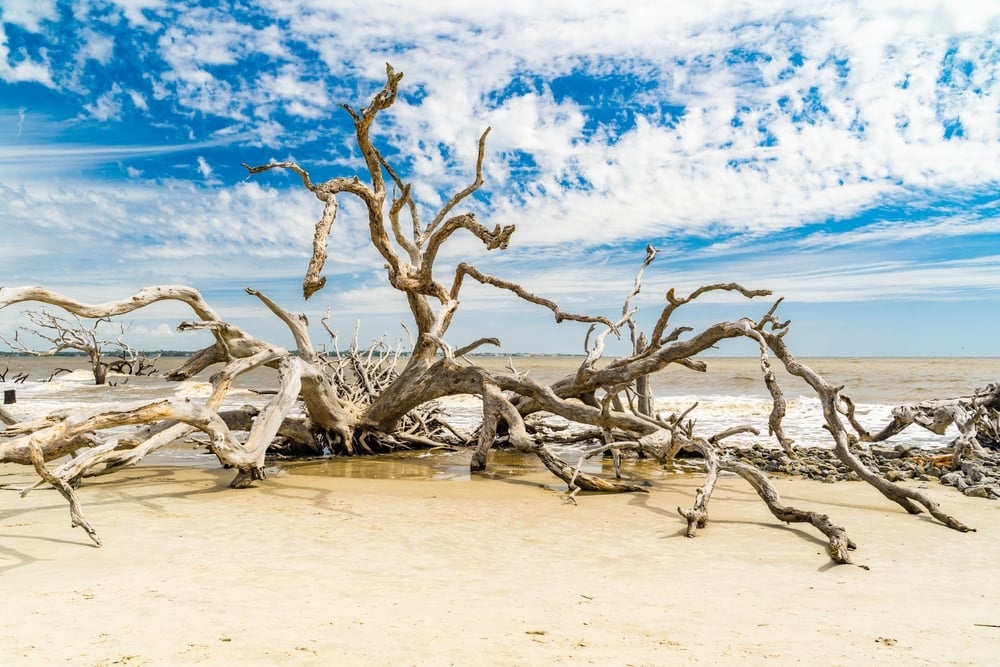
Living on Jekyll Island: peaceful, beautiful and intentionally removed
I love Jekyll. Our family often chooses it when we want to walk on the beach with the kids. It feels more natural, less hurried and more protected from overdevelopment than many beach communities.
That is exactly why some people adore living there.
Jekyll is a particularly compelling fit if you value:
- A quieter, nature-centered setting
- Biking, beach walking, wildlife and outdoor recreation
- Golf and an established seasonal community
- A slower pace with less commercial development
- More privacy than the most active parts of St. Simons
But Jekyll’s privacy comes with logistical tradeoffs. The island is reached by a long, two-lane causeway, and vehicles must have a paid parking pass to enter. Traffic can stack up near the entry during busy periods and major events. Jekyll has a market for groceries and essentials, along with a Mercer Medicine clinic offering primary and immediate-care services, but it does not have the same range of full-service shopping or medical facilities available on the mainland. Families with school-age children should also know that there is no public K–12 school campus on Jekyll, so the school routine requires leaving the island.
Jekyll can be wonderfully peaceful in cooler months, and its winter residents and snowbirds create a thriving seasonal community. It is not deserted in summer, though. Warm weather, holidays and events bring plenty of visitors.
My personal hesitation would be commuting off the island every day. Some people would consider the causeway their daily decompression time. I would eventually start negotiating with it like it had personally wronged me.
Island or mainland: what are you actually buying?
People often frame this choice as “beach versus no beach,” but that is too simplistic.
On the islands, you are often paying for proximity, atmosphere and a lifestyle that begins outside your front door. On the mainland, the same budget may buy more square footage, a larger lot, a newer home, fewer restrictions or better boating access.
Neither is automatically the smarter purchase. It depends on what you will use.
And now for the opinion that may save you money: you probably will not go to the beach as often as you think you will.
People imagine moving here and ending every workday barefoot at sunset. Then real life arrives with school pickup, laundry, dinner and a child who cannot find one shoe. Living 15 or 30 minutes from the beach may not materially change your life if you only go twice a month.
If you genuinely want to walk or bike to the beach several times a week, pay attention to exact location on St. Simons or Jekyll. If you mainly want the option of going on weekends, Brunswick may give you the coastal life you want without requiring island pricing.

Where should households with children begin looking?
We do not choose a neighborhood for someone based on family status, and there is no single “best” area for families. What we can do is help buyers compare the practical factors that affect a household’s routine: school logistics, commute time, lot size, sidewalks, neighborhood amenities, bedroom count and access to activities.
Glynn County Schools currently lists ten public elementary schools, four middle schools and two traditional public high schools—Brunswick High School and Glynn Academy. The area also has private-school options, including Frederica Academy, Heritage Christian Academy, Brunswick Christian Academy, St. Francis Xavier Catholic School and St. Simons Christian School. Availability, grade levels, admissions and attendance zones can change, so buyers should verify details directly with each school or the district rather than relying on a real estate listing.
In practical terms:
- St. Simons may appeal to households prioritizing island activities, beach access and proximity to island schools or programs.
- The Harry Driggers area offers many established residential options and convenient access to everyday services.
- Exit 29 and southern Glynn may appeal to buyers seeking more land, fewer restrictions or easier access to I-95.
- Jekyll requires an off-island school commute, which should be tested during the actual times you would drive it.
School decisions are personal. Start with the daily routine you need, then verify the current facts for each address.
Where should retirees begin looking?
Again, lifestyle matters more than the number on your birthday cake.
Someone seeking restaurants, golf, events and a built-in social rhythm may naturally gravitate toward St. Simons. Someone who wants nature, bike paths and a quieter daily pace may prefer Jekyll. A buyer prioritizing space, boating, easier medical access or a more manageable housing budget may find Brunswick is the better fit.
If your vision of retirement is truly private—acres, distance and very few people—none of the three best-known areas may be perfect. Jekyll feels peaceful, but it is still a destination that gets busy. In that case, expand the search west into mainland Glynn County or north toward Darien and McIntosh County.
Also consider the unglamorous questions now: How much home maintenance do you want? Do you need one-level living? How far are you comfortable driving for specialists? Does a gated or HOA-managed community feel reassuring or restrictive? Those answers usually matter more than whether the listing includes the word “coastal.”
The best areas for boating and waterfront living
This is where Brunswick deserves far more attention than it often receives.
Mainland Glynn County is wrapped in rivers, tidal creeks and marsh. Blythe Island, Oak Grove Island, Riverside and Royal Oaks are all worth exploring for buyers interested in boating or water views. Blythe Island Regional Park also includes a marina and access to the South Brunswick River.
St. Simons offers a wider mix of coastal water settings, including beachfront, marsh, river and Intracoastal access. The pricing can rise quickly for premier deepwater or oceanfront property, so buyers should be clear about what they mean by “waterfront.” A marsh view is not the same as navigable deep water, and a dock permit is not guaranteed simply because water is visible from the porch.
For any waterfront home, investigate:
- Tidal depth and true navigability
- Dock permits and condition
- Bridge clearance and route to open water
- Flood zone, elevation and insurance costs
- Bulkheads, erosion and shoreline maintenance
- Boat-storage and HOA restrictions
The prettiest view in the world is not a substitute for due diligence.
Can you commute to Jacksonville or Savannah?
Yes. People do it every day.
Whether you should do it is a different question.
The Golden Isles sit near I-95 between Savannah and Jacksonville, making both cities regionally accessible. But commute time changes substantially based on whether you start on an island, near Exit 29, in north Glynn County, in Darien or farther south in Camden County. Your destination matters too; “Jacksonville” could mean the airport, downtown or an office another 30 minutes across the metro area.
Personally, I find the Jacksonville drive easier than the Savannah drive. There is more to see, and northbound interstate traffic has a special talent for becoming annoying at the exact wrong time. But I have also had a 45-minute commute and occasionally miss the uninterrupted time for audiobooks and podcasts. A long commute is not automatically miserable if it fits the way you operate.
Before buying, drive the route at the time you would actually commute. Do not test it at 11 a.m. on vacation and declare it “only an hour.”
As a general strategy:
- Regular Jacksonville commuters should consider Exit 29, southern Glynn and possibly Camden County.
- Regular Savannah commuters may want to look at north Glynn, Darien or McIntosh County.
- Commuting from St. Simons adds causeway time before reaching I-95.
- Commuting from Jekyll adds the island’s two-lane causeway and entry area to the equation.
Two nearby alternatives worth knowing
Darien and McIntosh County: North of Brunswick, Darien offers a smaller coastal-town atmosphere, river access and opportunities for more land and privacy. It can make sense for someone who likes the Golden Isles but wants a quieter or more rural setting—or needs to point the commute toward Savannah.
Camden County: South of Glynn County, Kingsland and St. Marys can be smart additions to the search for buyers connected to Naval Submarine Base Kings Bay or Jacksonville. St. Marys offers its own waterfront downtown and access point for Cumberland Island, while Kingsland provides convenient interstate access. Camden is not the Golden Isles, but the right home does not care where a tourism boundary ends.
So, which one is right for you?
Choose St. Simons Island if you want the most social, walkable and activity-filled version of coastal life—and you are comfortable paying more or compromising on space to get it.
Choose Brunswick or mainland Glynn County if you want more housing variety, better value, easier errands, excellent boating options and the ability to enjoy island life without having to live inside it every day.
Choose Jekyll Island if you value nature, quiet and a truly distinct island rhythm enough to accept fewer services and a longer trip off the island.
Look toward Darien or Camden County if your job, budget, land requirements or appetite for privacy suggests that the best answer may sit just outside the traditional Golden Isles map.
The best way to decide is not to tell us where you vacationed. Tell us how you actually live.
Where do you need to be at 8:10 on a weekday? How often will you use a boat? Do you want to walk to dinner or avoid seeing another person from your back porch? What do you want to spend—and what tradeoff will make you resent your house six months after closing?
If you already recognize yourself in one of these areas, start there. If you still cannot decide, reach out to Beach + Main. We will help you compare the communities based on your real routine, not the imaginary version of coastal life you saved on Pinterest.
You can sit with us. We’ll help you figure out where.
Helpful local resources
- Golden Isles relocation information
- Glynn County Schools and current school directory
- Jekyll Island resident and visitor information
- Mercer Medicine Jekyll Island clinic
Real estate availability, pricing, school assignments, insurance costs, flood information, community rules and local services can change. Buyers should verify details that matter to their decision with the appropriate school district, government agency, insurer, HOA or other qualified source.